
Undergraduate Certificate in Interoperability Standards in Electronic Health Records
This certificate equips students with the skills to integrate and manage electronic health records, enhancing healthcare data exchange and interoperability.
Undergraduate Certificate in Interoperability Standards in Electronic Health Records
Programme Overview
The Undergraduate Certificate in Interoperability Standards in Electronic Health Records is designed for healthcare professionals, IT specialists, and students aiming to enhance their skills in health informatics. First, you will gain a solid understanding of key interoperability standards such as HL7, FHIR, and IHE. Then, you will learn how to apply these standards to improve healthcare data exchange.
Next, you will develop practical skills in implementing and managing electronic health records (EHRs) systems. Finally, you will explore the ethical and regulatory aspects of health data management. Upon completion, you will be well-prepared to drive interoperability initiatives in various healthcare settings.
What You'll Learn
Ready to become a hero in healthcare? Our Undergraduate Certificate in Interoperability Standards in Electronic Health Records sets you on a path to connect, innovate, and save lives. First, you'll dive into the fascinating world of health data standards. Next, you will learn to bridge the gap between different healthcare systems, making patient information accessible anywhere, anytime.
You'll master key technologies such as HL7, FHIR, and IHE. Moreover, you'll gain hands-on experience with real-world case studies and projects. Consequently, you'll be well-prepared to take on exciting roles such as health information exchange (HIE) coordinator, interoperability specialist, or health IT consultant.
Join us and become a champion of seamless healthcare. Your journey starts here.
Programme Highlights
Industry-Aligned Curriculum
Developed with industry leaders to ensure practical, job-ready skills valued by employers worldwide.
Expert Faculty
Learn from experienced professionals with real-world expertise in your chosen field.
Flexible Learning
Study at your own pace, from anywhere in the world, with our flexible online platform.
Industry Focus
Practical, real-world knowledge designed to meet the demands of today's competitive job market.
Latest Curriculum
Stay ahead with constantly updated content reflecting the latest industry trends and best practices.
Career Advancement
Unlock new opportunities with a globally recognized qualification respected by employers.
Topics Covered
- Introduction to Electronic Health Records: Understand the basics of electronic health records (EHRs) and their importance in healthcare.
- Healthcare Data Standards: Learn about the standards that govern healthcare data interchange and storage.
- Interoperability Frameworks: Examine frameworks that facilitate the seamless exchange of health information.
- HL7 Standards: Study the Health Level Seven (HL7) standards for clinical and administrative data.
- FHIR (Fast Healthcare Interoperability Resources): Explore FHIR, a modern standard for exchanging healthcare information electronically.
- Implementation and Integration Strategies: Develop skills in implementing and integrating interoperability standards in EHR systems.
Key Facts
Audience: This program is for healthcare professionals and IT specialists. It is also suitable for students interested in health informatics.
Prerequisites: First, complete a high school diploma. Also, have basic computer skills. You will need access to a computer and the internet. No prior healthcare experience is required.
Outcomes: First, students will learn key standards such as HL7 and FHIR. Next, they will gain hands-on skills in data exchange. Students will also understand the importance of interoperability in healthcare. As a result, they will be ready to improve electronic health records. This means applying their knowledge in real-world settings.
Why This Course
Firstly, learners should pick this program due to its focus on real-world applications. Firstly, it equips students with practical skills. Secondly, it enhances employability. Secondly, it offers flexibility. Students can complete the coursework at their own pace. Thirdly, it fosters networking opportunities with industry professionals. It also provides a pathway to more advanced studies.
Programme Title
Undergraduate Certificate in Interoperability Standards in Electronic Health Records
Course Brochure
Download our comprehensive course brochure with all details
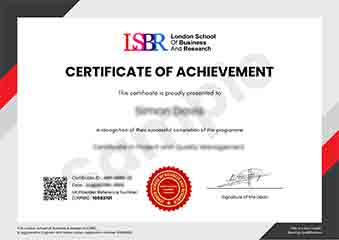
Sample Certificate
Preview the certificate you'll receive upon successful completion of this program.
Pay as an Employer
Request an invoice for your company to pay for this course. Perfect for corporate training and professional development.
What People Say About Us
Hear from our students about their experience with the Undergraduate Certificate in Interoperability Standards in Electronic Health Records at LSBR UK - Executive Education.
Charlotte Williams
United Kingdom"The course content was incredibly comprehensive, covering a wide range of interoperability standards that are crucial in the healthcare industry. I gained practical skills in implementing these standards, which has significantly boosted my confidence and employability in the field of electronic health records."
Rahul Singh
India"This course has been incredibly beneficial in bridging the gap between academic knowledge and real-world application in healthcare IT. The focus on industry-relevant interoperability standards has not only enhanced my technical skills but also opened up new career opportunities in electronic health records management, making me a more competitive candidate in the job market."
Zoe Williams
Australia"The course structure was exceptionally well-organized, with modules that flowed seamlessly from one topic to the next, making complex concepts in interoperability standards easy to grasp. The comprehensive content not only provided a solid foundation in electronic health records but also highlighted real-world applications, which I found invaluable for my professional growth in the healthcare technology field."