
Undergraduate Certificate in Math in Culinary Arts: Quantitative Cooking
This certificate equips students with the skills to apply mathematical principles to cooking and baking, enhancing precision and innovation in culinary arts.
Undergraduate Certificate in Math in Culinary Arts: Quantitative Cooking
Programme Overview
The Undergraduate Certificate in Math in Culinary Arts: Quantitative Cooking is designed for individuals with an interest in blending culinary arts with quantitative analysis, aiming to enhance the precision and efficiency of cooking processes. This program equips students with the skills to apply mathematical principles to culinary techniques, such as scaling recipes, managing inventory, and understanding food science through a quantitative lens. By integrating advanced mathematical concepts with practical culinary practices, students learn to develop innovative approaches to menu planning, cost control, and food production.
Key skills and knowledge developed in this program include proficiency in quantitative methods for ingredient measurement, temperature control, and time management in cooking. Students will also gain expertise in data analysis for menu optimization, cost-benefit analysis of ingredients, and creating sustainable and efficient kitchen operations. The program emphasizes the application of statistical tools and mathematical models to solve complex culinary challenges, thereby fostering a deeper understanding of the scientific basis of cooking and food preparation.
The career impact of this program is significant, as graduates are well-prepared to assume leadership roles in culinary management, food science research, and quantitative culinary analysis. They can pursue positions such as executive chefs, food service managers, culinary researchers, and data-driven culinary entrepreneurs, where their ability to blend mathematical precision with culinary artistry is highly valued.
What You'll Learn
Embark on a unique and exciting journey with our Undergraduate Certificate in Math in Culinary Arts: Quantitative Cooking. This innovative program bridges the gap between mathematics and culinary arts, equipping students with the skills to transform numbers into delicious culinary creations. Through a blend of theoretical and practical learning, students explore the mathematical principles that underpin cooking techniques, ingredient interactions, and menu planning.
Key topics include the role of ratios and proportions in recipes, the application of statistical analysis in quality control, and the use of algebra in scaling recipes. Students learn to apply mathematical concepts to develop innovative dishes, optimize food production processes, and enhance the flavor and texture of their culinary offerings.
Graduates are well-prepared to excel in a variety of roles across the culinary industry. They can work as culinary mathematicians, developing precise and efficient cooking formulas, or as chefs in high-end restaurants, where they can create complex dishes with mathematical precision. Other career paths include food science research, culinary education, and product development in food manufacturing companies.
This program offers a unique opportunity to leverage mathematical skills in a creative and dynamic field, making students highly sought after in the culinary world. Join us and discover how numbers can be the secret ingredient to your success in the kitchen.
Programme Highlights
Industry-Aligned Curriculum
Developed with industry leaders for job-ready skills
Globally Recognised Certificate
Recognised by employers across 180+ countries
Flexible Online Learning
Study at your own pace with lifetime access
Instant Access
Start learning immediately, no application process
Constantly Updated Content
Latest industry trends and best practices
Career Advancement
87% report measurable career progression within 6 months
Topics Covered
- Basic Arithmetic in Culinary Contexts: Covers essential arithmetic operations and their applications in culinary settings.: Measurement and Conversion: Focuses on understanding and converting culinary measurements.
- Proportional Reasoning in Recipes: Teaches how to adjust recipes based on proportional reasoning.: Temperature and Time Management: Discusses the importance of temperature control and timing in cooking.
- Cost Analysis in Culinary Operations: Introduces methods for cost analysis in food preparation.: Statistical Analysis for Culinary Quality: Explores basic statistical methods to ensure culinary quality and consistency.
What You Get When You Enroll
Key Facts
Audience: High school graduates interested in math and cooking
Prerequisites: Basic math skills, culinary interest
Outcomes: Analyze recipes quantitatively, develop precise cooking techniques
Ready to Advance Your Career?
Join thousands of professionals who have transformed their careers with LSBR UK
Why This Course
Enhanced Precision in Culinary Operations: An undergraduate certificate in Math in Culinary Arts: Quantitative Cooking equips professionals with the ability to apply mathematical concepts to culinary practices. This includes understanding and manipulating recipes, calculating portion sizes, and managing inventory more efficiently. For instance, chefs can use ratios and proportions to adjust recipes for various serving sizes, ensuring consistent quality and reducing waste.
Data-Driven Decision Making: In the modern culinary industry, data analysis is crucial. Professionals with this certificate can leverage quantitative skills to analyze sales trends, customer preferences, and ingredient costs. For example, by analyzing sales data, they can identify peak dining periods and adjust menu offerings to maximize revenue and customer satisfaction.
Advanced Problem Solving and Innovation: The program fosters a deeper understanding of how quantitative methods can solve culinary challenges. For instance, professionals can use statistical analysis to optimize the sourcing of ingredients based on nutritional value, sustainability, and cost-effectiveness. This not only enhances the dining experience but also aligns with contemporary consumer demands for healthier, more sustainable food options.
Career Advancement Opportunities: With specialized skills in math applied to culinary arts, professionals can advance into leadership roles such as culinary directors or food scientists. They can also pursue careers in food research, nutrition, and food safety, where a strong foundation in both culinary arts and mathematics is highly valued.
3-4 Weeks
Study at your own pace
Course Brochure
Download our comprehensive course brochure with all details
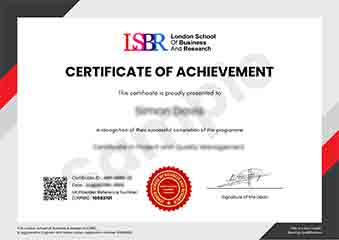
Sample Certificate
Preview the certificate you'll receive upon successful completion of this program.
Get Free Course Info
Receive detailed course information, curriculum breakdown, and career outcomes straight to your inbox.
Employer Sponsored?
Many employers cover professional development costs. Request a corporate invoice and we'll handle the rest. Bulk enrollment discounts available for teams of 3+.
Your Path to Certification
Four simple steps to your professionally recognised qualification
Enroll & Get Instant Access
Complete your enrollment and access course materials immediately
Study at Your Own Pace
Work through the modules on your schedule, from anywhere in the world
Complete Assessments
Demonstrate your knowledge through practical, real-world assessments
Receive Your Certificate
Get your official LSBR UK certificate, recognised across 180+ countries
Join Thousands Who Transformed Their Careers
Our graduates consistently report measurable career growth and professional advancement after completing their programmes.
What People Say About Us
Hear from our students about their experience with the Undergraduate Certificate in Math in Culinary Arts: Quantitative Cooking at LSBR UK - Executive Education.
James Thompson
United Kingdom"The course content is incredibly rich and well-structured, providing a solid foundation in applying mathematical principles to culinary techniques. I've gained invaluable practical skills that have enhanced my ability to innovate in the kitchen and approach cooking with a more scientific mindset, which is incredibly beneficial for my career in culinary arts."
Ryan MacLeod
Canada"This course has been incredibly valuable, bridging the gap between culinary arts and mathematics in a way that is directly applicable to the industry. It has not only enhanced my ability to manage inventory and costs more efficiently but also opened up new career opportunities in advanced culinary roles that require a strong grasp of quantitative methods."
Charlotte Williams
United Kingdom"The course structure is well-organized, seamlessly blending mathematical concepts with culinary techniques, which not only deepens my understanding but also enhances my ability to apply quantitative methods in real-world cooking scenarios, significantly boosting my professional growth in the culinary field."
Still deciding?
Join 23,000+ professionals who advanced their careers. Enroll today and start learning immediately.
Enroll NowSecure payment • Instant access • Certificate included