
Undergraduate Certificate in Mathematical Modeling in Bio Systems
This certificate equips students with advanced mathematical modeling skills specifically for analyzing biological systems, enhancing career prospects in bioinformatics and related fields.
Undergraduate Certificate in Mathematical Modeling in Bio Systems
Programme Overview
The Undergraduate Certificate in Mathematical Modeling in Bio Systems is designed for students with a strong interest in applying mathematical principles to biological systems. This program equips learners with the skills necessary to analyze complex biological data, simulate biological processes, and develop predictive models. It is ideal for students in mathematics, biology, and related fields who seek to enhance their interdisciplinary capabilities and prepare for careers in research, biotechnology, and bioinformatics.
Students in this program will develop a robust set of skills, including proficiency in mathematical modeling techniques, proficiency in using software tools for data analysis and simulation, and a deep understanding of biological systems. Key areas of study include differential equations, statistical methods, and computational biology, which are essential for addressing real-world challenges in areas such as disease modeling, ecosystem dynamics, and drug development.
Upon completion of the program, graduates will be well-prepared for careers in academia, industry, and research institutions. They will have the expertise to contribute to the development of innovative solutions in biotechnology, pharmaceuticals, and environmental science. The certificate also serves as a foundation for pursuing advanced studies in mathematical biology, computational biology, and related fields, opening up opportunities for further specialization and higher education.
What You'll Learn
The Undergraduate Certificate in Mathematical Modeling in Bio Systems is a cutting-edge program designed to equip students with the tools and knowledge necessary to solve complex biological and ecological problems through mathematical and computational approaches. This program bridges the gap between mathematics and biology, offering a unique educational experience that prepares students for careers at the intersection of these disciplines.
Key topics covered include population dynamics, epidemiological modeling, gene regulatory networks, and systems biology. Students learn advanced mathematical techniques such as differential equations, stochastic processes, and machine learning algorithms, tailored to model and analyze biological systems. Practical applications of these skills are emphasized through hands-on projects and collaborations with leading researchers in bio systems.
Graduates are well-prepared to apply their expertise in various fields, including pharmaceutical research, environmental conservation, and public health. They can work as modeling analysts, develop predictive models to understand disease spread, design more effective conservation strategies, and contribute to the development of new drugs. The program also encourages entrepreneurial ventures, with opportunities to start companies focused on innovative bio systems solutions.
By the end of the program, students will have a robust skill set that not only enhances their academic and professional profiles but also positions them to drive significant advancements in bio systems research and application.
Programme Highlights
Industry-Aligned Curriculum
Developed with industry leaders for job-ready skills
Globally Recognised Certificate
Recognised by employers across 180+ countries
Flexible Online Learning
Study at your own pace with lifetime access
Instant Access
Start learning immediately, no application process
Constantly Updated Content
Latest industry trends and best practices
Career Advancement
87% report measurable career progression within 6 months
Topics Covered
- Introduction to Bio Systems: Introduces the fundamental aspects of biological systems and their modeling.: Mathematical Foundations: Covers essential mathematical concepts and tools used in modeling.
- Data Analysis Techniques: Focuses on statistical methods and data analysis in biological contexts.: Modeling Techniques: Explores various modeling approaches and their applications in bio systems.
- Computational Methods: Teaches the use of computational tools and software for modeling.: Case Studies in Bio Systems: Analyzes real-world problems and models in biological systems.
What You Get When You Enroll
Key Facts
Audience: STEM undergraduates, bioinformatics enthusiasts
Prerequisites: Calculus, basic biology, programming skills
Outcomes: Proficient in modeling biological systems, data analysis skills, publication-ready research papers
Ready to Advance Your Career?
Join thousands of professionals who have transformed their careers with LSBR UK
Why This Course
Enhanced Career Opportunities: An Undergraduate Certificate in Mathematical Modeling in BioSystems can significantly enhance career prospects in the biotechnology, pharmaceutical, and environmental sectors. Professionals with this certification can apply mathematical models to solve complex biological problems, such as predicting the spread of diseases or optimizing drug delivery systems, thereby making them valuable assets in research and development roles.
Advanced Skill Development: This program equips professionals with advanced skills in quantitative analysis and computational techniques, which are crucial for modern bioinformatics and systems biology. Students learn to use sophisticated software tools and programming languages like MATLAB and Python, enabling them to process and analyze large biological datasets efficiently. These skills are highly transferable and applicable across various industries.
Interdisciplinary Expertise: The curriculum fosters a deep understanding of both mathematical and biological principles, allowing professionals to bridge the gap between these disciplines. This interdisciplinary approach is critical in fields where biological phenomena are analyzed through mathematical lenses, such as genomics, proteomics, and ecological modeling. Graduates can contribute to cutting-edge research and innovation, driving advancements in areas like personalized medicine and sustainable agriculture.
3-4 Weeks
Study at your own pace
Course Brochure
Download our comprehensive course brochure with all details
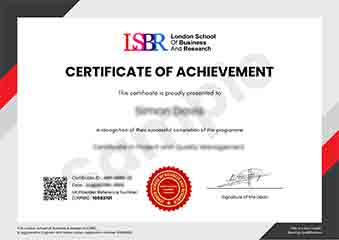
Sample Certificate
Preview the certificate you'll receive upon successful completion of this program.
Get Free Course Info
Receive detailed course information, curriculum breakdown, and career outcomes straight to your inbox.
Employer Sponsored?
Many employers cover professional development costs. Request a corporate invoice and we'll handle the rest. Bulk enrollment discounts available for teams of 3+.
Your Path to Certification
Four simple steps to your professionally recognised qualification
Enroll & Get Instant Access
Complete your enrollment and access course materials immediately
Study at Your Own Pace
Work through the modules on your schedule, from anywhere in the world
Complete Assessments
Demonstrate your knowledge through practical, real-world assessments
Receive Your Certificate
Get your official LSBR UK certificate, recognised across 180+ countries
Join Thousands Who Transformed Their Careers
Our graduates consistently report measurable career growth and professional advancement after completing their programmes.
What People Say About Us
Hear from our students about their experience with the Undergraduate Certificate in Mathematical Modeling in Bio Systems at LSBR UK - Executive Education.
James Thompson
United Kingdom"The course provided a robust foundation in mathematical modeling applied to biological systems, equipping me with valuable analytical skills that have significantly enhanced my problem-solving abilities in real-world scenarios. I gained practical experience that I believe will be highly beneficial in my future career in biotechnology."
Jia Li Lim
Singapore"This certificate has been incredibly valuable, equipping me with advanced mathematical modeling skills that are directly applicable in the biotech industry. It has opened up new career opportunities and enhanced my ability to contribute to complex bio systems projects."
Hans Weber
Germany"The course structure is well-organized, providing a comprehensive foundation in mathematical modeling with direct applications to biological systems, which has significantly enhanced my understanding and analytical skills in this field."
Still deciding?
Join 23,000+ professionals who advanced their careers. Enroll today and start learning immediately.
Enroll NowSecure payment • Instant access • Certificate included