
Undergraduate Certificate in Microbial Symbiosis and Cooperation
Explore microbial interactions, gaining insights into symbiotic relationships and cooperative behaviors.
Undergraduate Certificate in Microbial Symbiosis and Cooperation
Programme Overview
The Undergraduate Certificate in Microbial Symbiosis and Cooperation is a comprehensive programme that delves into the complex relationships between microorganisms and their environments, exploring the mechanisms and consequences of symbiotic interactions. Designed for undergraduate students and professionals in fields such as biology, ecology, and environmental science, this programme provides a foundational understanding of microbial ecology, evolutionary biology, and molecular biology.
Through a combination of lectures, discussions, and laboratory experiments, learners will develop practical skills in microbiological techniques, data analysis, and scientific communication. They will gain knowledge of the molecular mechanisms underlying symbiotic relationships, including quorum sensing, biofilm formation, and nutrient cycling, as well as the ecological and evolutionary contexts in which these interactions occur. Students will also learn to critically evaluate scientific literature and design experiments to investigate microbial symbiosis.
Upon completion of the programme, graduates will be well-prepared for careers in research and development, environmental consulting, and public health, with a deep understanding of the intricate relationships between microorganisms and their environments. They will possess the skills and knowledge to contribute to the development of novel biotechnological applications, inform environmental policy and conservation efforts, and address pressing global health challenges.
What You'll Learn
The Undergraduate Certificate in Microbial Symbiosis and Cooperation equips students with a deep understanding of the complex relationships between microorganisms and their environments, as well as the cooperative interactions that underpin these relationships. This programme is valuable and relevant in today's professional landscape, as it addresses the growing recognition of the critical role that microorganisms play in ecosystems, human health, and biotechnology. Key topics covered include the evolution of symbiotic relationships, mechanisms of microbial cooperation, and the applications of symbiotic systems in fields such as agriculture, medicine, and environmental remediation.
Students develop competencies in microbiological techniques, bioinformatics, and systems thinking, as well as the ability to design and conduct experiments, analyze data, and communicate complex scientific concepts. Graduates apply these skills in real-world settings, such as developing novel biofertilizers, designing probiotic therapies, or optimizing bioremediation strategies. The skills and knowledge gained through this programme also open up career advancement opportunities in research and development, science policy, and industry, where understanding microbial symbiosis and cooperation is essential for addressing global challenges such as sustainable food production, human health, and environmental sustainability. Industry applications include biotechnology, pharmaceuticals, and environmental consulting.
Programme Highlights
Industry-Aligned Curriculum
Developed with industry leaders for job-ready skills
Globally Recognised Certificate
Recognised by employers across 180+ countries
Flexible Online Learning
Study at your own pace with lifetime access
Instant Access
Start learning immediately, no application process
Constantly Updated Content
Latest industry trends and best practices
Career Advancement
87% report measurable career progression within 6 months
Topics Covered
- Introduction to Microbes: Microbes interact with environments.
- Symbiotic Relationships: Organisms cooperate and coexist.
- Microbial Ecology: Microbes shape ecosystems greatly.
- Fungal Symbiosis: Fungi form symbiotic bonds.
- Bacterial Cooperation: Bacteria cooperate with hosts.
- Applied Microbial Symbiosis: Symbiosis aids human health.
What You Get When You Enroll
Key Facts
Target Audience: Students and professionals in biology, ecology, and environmental science seeking to understand microbial interactions.
Prerequisites: No formal prerequisites required, but basic knowledge of biology and ecology is beneficial.
Learning Outcomes:
Analyze the mechanisms of microbial symbiosis and cooperation.
Evaluate the role of microbes in ecosystem functioning.
Identify the applications of microbial symbiosis in biotechnology and environmental management.
Explain the evolutionary principles underlying microbial interactions.
Design experiments to investigate microbial cooperation.
Assessment Method: Quiz-based assessment to evaluate understanding of microbial symbiosis and cooperation concepts.
Certification: Industry-recognised digital certificate awarded upon successful completion of the programme.
Ready to Advance Your Career?
Join thousands of professionals who have transformed their careers with LSBR UK
Why This Course
The 'Undergraduate Certificate in Microbial Symbiosis and Cooperation' programme offers a unique opportunity for professionals to delve into the fascinating world of microorganisms and their interactions, unlocking new avenues for research, innovation, and application. By exploring the complex relationships between microbes and their environments, professionals can gain a deeper understanding of the intricate mechanisms that underlie many biological processes.
The programme provides a comprehensive foundation in microbial symbiosis, enabling professionals to develop a nuanced understanding of the complex interactions between microorganisms and their hosts, which is essential for advancing research in fields such as medicine, agriculture, and environmental science. This knowledge can be applied to develop novel therapeutic strategies, improve crop yields, or enhance ecosystem resilience. Professionals who complete this programme will be well-equipped to design and implement experiments, collect and analyze data, and interpret results in the context of microbial symbiosis.
The curriculum is designed to foster critical thinking, problem-solving, and collaboration skills, which are highly valued in today's fast-paced and interdisciplinary research environment. Through a combination of lectures, discussions, and hands-on activities, professionals will learn to approach complex problems from multiple angles, integrating concepts from microbiology, ecology, and evolutionary biology. This integrative approach will enable professionals to tackle real-world challenges, such as developing sustainable solutions for environmental remediation or improving human health outcomes.
The programme's emphasis on cooperation and symbiosis reflects the growing recognition of the importance of microbial communities in shaping ecosystem function and human health, making it
3-4 Weeks
Study at your own pace
Course Brochure
Download our comprehensive course brochure with all details
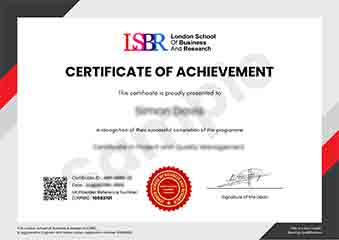
Sample Certificate
Preview the certificate you'll receive upon successful completion of this program.
Get Free Course Info
Receive detailed course information, curriculum breakdown, and career outcomes straight to your inbox.
Employer Sponsored?
Many employers cover professional development costs. Request a corporate invoice and we'll handle the rest. Bulk enrollment discounts available for teams of 3+.
Your Path to Certification
Four simple steps to your professionally recognised qualification
Enroll & Get Instant Access
Complete your enrollment and access course materials immediately
Study at Your Own Pace
Work through the modules on your schedule, from anywhere in the world
Complete Assessments
Demonstrate your knowledge through practical, real-world assessments
Receive Your Certificate
Get your official LSBR UK certificate, recognised across 180+ countries
Join Thousands Who Transformed Their Careers
Our graduates consistently report measurable career growth and professional advancement after completing their programmes.
What People Say About Us
Hear from our students about their experience with the Undergraduate Certificate in Microbial Symbiosis and Cooperation at LSBR UK - Executive Education.
Sophie Brown
United Kingdom"The course material was incredibly comprehensive and well-structured, allowing me to gain a deep understanding of the complex interactions between microbes and their environments. Through the program, I developed practical skills in analyzing microbial communities and understanding the mechanisms of symbiosis, which I believe will be highly beneficial in my future career in microbiology. The knowledge I gained has not only broadened my perspective on the field but also equipped me with the skills to design and conduct experiments that explore the intricacies of microbial cooperation."
Fatimah Ibrahim
Malaysia"The Undergraduate Certificate in Microbial Symbiosis and Cooperation has been instrumental in deepening my understanding of the complex relationships between microorganisms and their environments, which has significantly enhanced my skills in microbiome analysis and manipulation. This expertise has not only opened up new avenues for research and development in the biotechnology industry, but also boosted my confidence in pursuing a career in this field, where I can apply my knowledge to develop innovative solutions for real-world problems. By gaining a solid foundation in microbial symbiosis, I am now better equipped to contribute to cutting-edge projects and collaborations that have the potential to drive meaningful advancements in fields such as environmental science and human health."
Emma Tremblay
Canada"The Undergraduate Certificate in Microbial Symbiosis and Cooperation was expertly structured to gradually build my understanding of complex microbial interactions, with each module seamlessly flowing into the next to create a cohesive learning experience. I appreciated the comprehensive content, which not only delved into the theoretical foundations of microbial symbiosis but also explored its real-world applications, providing me with a deeper appreciation for the significance of cooperation in microbial ecosystems. Through this course, I gained a rich foundation of knowledge that will undoubtedly enhance my professional growth in the field of microbiology."
Still deciding?
Join 23,000+ professionals who advanced their careers. Enroll today and start learning immediately.
Enroll NowSecure payment • Instant access • Certificate included