
Undergraduate Certificate in Modeling Virus Transmission Dynamics
Gain expertise in modeling virus transmission dynamics for public health interventions and epidemic prediction.
Undergraduate Certificate in Modeling Virus Transmission Dynamics
Programme Overview
The Undergraduate Certificate in Modeling Virus Transmission Dynamics is designed for students with a foundational interest in mathematical modeling, epidemiology, and public health. This program equips learners with the skills necessary to understand and predict the spread of viral infections, using advanced mathematical and computational tools. The curriculum encompasses a range of topics, including differential equations, statistical methods, and computer simulations, which are crucial for analyzing complex transmission dynamics. Learners will gain proficiency in using software and programming languages commonly employed in this field, such as MATLAB and R, to model and simulate virus transmission scenarios. Additionally, the program integrates case studies and real-world applications, ensuring that students can apply their knowledge to current and emerging viral threats.
Upon completion, learners will possess a robust set of analytical and computational skills essential for careers in public health, biostatistics, and epidemiology. The program's emphasis on modeling techniques and data analysis prepares students to contribute to the development of effective public health strategies and interventions. Graduates are well-positioned to work in governmental health agencies, research institutions, non-profit organizations, and private sector companies focused on biotechnology and pharmaceuticals. The certificate also lays a strong foundation for pursuing advanced degrees in related fields, further enhancing career prospects in academia, research, and policy development.
What You'll Learn
Embark on a transformative journey into the intricate world of virus transmission with the Undergraduate Certificate in Modeling Virus Transmission Dynamics. This program equips you with cutting-edge skills in mathematical modeling, epidemiology, and data analysis, providing a unique perspective on public health challenges. You will delve into key areas such as infectious disease modeling, statistical inference, and the dynamics of viral spread, using real-world case studies from global health crises.
By mastering these skills, you will be well-prepared to contribute to the development of predictive models that can inform public health policies and interventions. Graduates of this program have the opportunity to work in various sectors, including government health agencies, pharmaceutical companies, and research institutions. Potential roles include epidemiologist, data analyst, and public health researcher, where you can play a pivotal role in mitigating the impact of infectious diseases.
This program not only enhances your analytical and problem-solving abilities but also fosters a deep understanding of the complex interactions between human populations and viruses. With a certificate from this program, you are well-positioned to make a meaningful impact in the field of public health, contributing to the global effort to control and prevent the spread of infectious diseases.
Programme Highlights
Industry-Aligned Curriculum
Developed with industry leaders for job-ready skills
Globally Recognised Certificate
Recognised by employers across 180+ countries
Flexible Online Learning
Study at your own pace with lifetime access
Instant Access
Start learning immediately, no application process
Constantly Updated Content
Latest industry trends and best practices
Career Advancement
87% report measurable career progression within 6 months
Topics Covered
- Foundational Concepts: Covers the core principles and key terminology.: Epidemiological Models: Introduces various models used to describe disease spread.
- Data Analysis Techniques: Teaches statistical methods for analyzing viral transmission data.: Computational Methods: Focuses on using software tools for modeling viral spread.
- Case Studies: Analyzes real-world examples of virus transmission dynamics.: Future Directions: Discusses emerging trends and challenges in the field.
What You Get When You Enroll
Key Facts
Aimed at students in biology, mathematics, and computer science
No specific prerequisites, but basic science knowledge recommended
Equips students with skills in modeling virus spread
Analyzes real-world data to predict transmission patterns
Develops computational models for public health applications
Ready to Advance Your Career?
Join thousands of professionals who have transformed their careers with LSBR UK
Why This Course
Enhanced Career Opportunities: Professionals in fields such as epidemiology, public health, and infectious disease modeling can significantly enhance their career prospects by obtaining an Undergraduate Certificate in Modeling Virus Transmission Dynamics. This specialized training equips them with advanced analytical and computational skills, making them more competitive in the job market. For instance, the ability to model and predict the spread of infectious diseases can lead to roles in disease surveillance, public health policy, and epidemic preparedness.
Improved Analytical and Computational Skills: The certificate program focuses on developing robust analytical and computational skills, which are crucial for understanding and predicting virus transmission dynamics. Students learn to use software and tools specific to modeling, such as Python, R, and specialized epidemiological software. These skills enable professionals to analyze complex data sets, create models, and interpret results effectively, thereby contributing to more informed public health strategies.
Specialization in a High-Growth Area: With the ongoing global health challenges, there is a growing demand for professionals who can model virus transmission dynamics. This specialization allows individuals to focus on a high-growth area, potentially leading to higher job security and specialized career paths. For example, graduates can work in research institutions, governmental health agencies, or private consulting firms that require expertise in disease modeling.
3-4 Weeks
Study at your own pace
Course Brochure
Download our comprehensive course brochure with all details
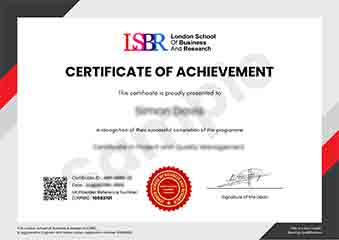
Sample Certificate
Preview the certificate you'll receive upon successful completion of this program.
Get Free Course Info
Receive detailed course information, curriculum breakdown, and career outcomes straight to your inbox.
Employer Sponsored?
Many employers cover professional development costs. Request a corporate invoice and we'll handle the rest. Bulk enrollment discounts available for teams of 3+.
Your Path to Certification
Four simple steps to your professionally recognised qualification
Enroll & Get Instant Access
Complete your enrollment and access course materials immediately
Study at Your Own Pace
Work through the modules on your schedule, from anywhere in the world
Complete Assessments
Demonstrate your knowledge through practical, real-world assessments
Receive Your Certificate
Get your official LSBR UK certificate, recognised across 180+ countries
Join Thousands Who Transformed Their Careers
Our graduates consistently report measurable career growth and professional advancement after completing their programmes.
What People Say About Us
Hear from our students about their experience with the Undergraduate Certificate in Modeling Virus Transmission Dynamics at LSBR UK - Executive Education.
Charlotte Williams
United Kingdom"The course content is incredibly thorough and well-structured, providing a solid foundation in the mathematical and computational models used to understand virus transmission dynamics. Gaining hands-on experience with these models has been invaluable, as it has equipped me with practical skills that are directly applicable to real-world scenarios in epidemiology and public health."
Anna Schmidt
Germany"This certificate has been instrumental in bridging the gap between theoretical knowledge and real-world applications in epidemiology. It has significantly enhanced my analytical skills and provided me with a robust foundation in modeling virus transmission, making me more competitive in the job market."
Anna Schmidt
Germany"The course structure is well-organized, providing a clear path from basic concepts to advanced modeling techniques, which greatly enhances my understanding of virus transmission dynamics. The comprehensive content, coupled with real-world applications, has been invaluable for my professional growth in epidemiology."
Still deciding?
Join 23,000+ professionals who advanced their careers. Enroll today and start learning immediately.
Enroll NowSecure payment • Instant access • Certificate included