
Undergraduate Certificate in Portable Biosensor Devices Development
Develops skills in designing and building portable biosensors for real-world applications and innovative healthcare solutions.
Undergraduate Certificate in Portable Biosensor Devices Development
Programme Overview
The Undergraduate Certificate in Portable Biosensor Devices Development is a comprehensive programme designed for students and professionals seeking to acquire expertise in the development of portable biosensor devices. This programme covers the fundamental principles of biosensor technology, including sensor design, microfluidics, and biochemical analysis, with a focus on portable and point-of-care devices. It is ideal for those with a background in biology, chemistry, physics, or engineering who wish to expand their knowledge and skills in this rapidly growing field.
Through this programme, learners will develop practical skills in designing and fabricating portable biosensor devices, as well as evaluating their performance and limitations. They will gain a deep understanding of the underlying biochemical and biophysical principles, including biomarker detection, signal transduction, and data analysis. Learners will also become proficient in using industry-standard software and hardware tools for device simulation, prototyping, and testing.
Upon completing this programme, graduates will be well-prepared to pursue careers in the development and application of portable biosensor devices in fields such as healthcare, environmental monitoring, and food safety. They will possess the knowledge and skills required to design, develop, and deploy innovative biosensor solutions that address real-world challenges, making them highly competitive in the job market and poised for success in this exciting and rapidly evolving field.
What You'll Learn
The Undergraduate Certificate in Portable Biosensor Devices Development equips students with the expertise to design, develop, and deploy innovative biosensor technologies, addressing the growing demand for point-of-care diagnostics and mobile health monitoring. This programme is valuable and relevant in today's professional landscape, as it converges engineering, biology, and data analysis to create wearable and handheld devices that can detect biomarkers, toxins, and other health indicators.
Key topics covered include microfluidics, nanotechnology, and sensor integration, as well as data acquisition and machine learning algorithms for signal processing and pattern recognition. Students develop competencies in programming languages such as Python and C++, and learn to apply industry-standard frameworks like Arduino and Raspberry Pi. Graduates apply these skills in real-world settings, such as developing low-cost diagnostic tools for resource-limited settings, creating wearable devices for tracking chronic diseases, or designing handheld sensors for environmental monitoring.
By mastering the development of portable biosensor devices, graduates can pursue career advancement opportunities in biomedical engineering, research and development, and the healthcare industry. They can work with companies that specialize in medical devices, or start their own ventures, leveraging their skills in sensor development, data analysis, and prototype testing to drive innovation and improve human health outcomes. The programme's emphasis on practical skills and industry-relevant technologies ensures that graduates are well-prepared to make a meaningful impact in this rapidly evolving field.
Programme Highlights
Industry-Aligned Curriculum
Developed with industry leaders for job-ready skills
Globally Recognised Certificate
Recognised by employers across 180+ countries
Flexible Online Learning
Study at your own pace with lifetime access
Instant Access
Start learning immediately, no application process
Constantly Updated Content
Latest industry trends and best practices
Career Advancement
87% report measurable career progression within 6 months
Topics Covered
- Introduction to Biosensors: Biosensor fundamentals explained.
- Microfluidics and Devices: Microfluidic devices design.
- Biomedical Instrumentation: Instrumentation for biosensors.
- Sensor Materials and Technologies: Sensor materials explored.
- Portable Device Development: Portable devices designed.
- Biosensor Applications and Testing: Biosensor applications tested.
What You Get When You Enroll
Key Facts
Target Audience: Students and professionals in biomedical engineering, biotechnology, and related fields seeking to develop skills in portable biosensor devices development.
Prerequisites: No formal prerequisites required, but basic knowledge of biology, chemistry, and electronics is beneficial.
Learning Outcomes:
Design and develop portable biosensor devices for various applications.
Apply principles of biotechnology and engineering to create innovative biosensor solutions.
Integrate microfluidics, nanotechnology, and electronics in biosensor device development.
Evaluate and optimize biosensor performance using experimental and computational methods.
Implement safety protocols and regulatory guidelines in biosensor device development.
Assessment Method: Quiz-based assessment to evaluate understanding of key concepts and skills in portable biosensor devices development.
Certification: Industry-recognised digital certificate awarded upon successful completion of the programme, verifying expertise in portable biosensor devices development.
Ready to Advance Your Career?
Join thousands of professionals who have transformed their careers with LSBR UK
Why This Course
The 'Undergraduate Certificate in Portable Biosensor Devices Development' programme is a unique opportunity for professionals to acquire specialized knowledge and skills in the rapidly evolving field of biosensor technology, enabling them to stay ahead of the curve in their careers. By choosing this programme, professionals can gain a competitive edge in the industry and contribute to the development of innovative solutions that improve human health and well-being.
The programme provides hands-on experience in designing and developing portable biosensor devices, allowing professionals to develop practical skills in sensor technology, microfluidics, and data analysis. This expertise can be applied to a wide range of applications, from medical diagnostics to environmental monitoring, and can lead to career advancement opportunities in research and development, product design, and testing. Professionals can expect to work on real-world projects, collaborating with industry partners and academic experts to develop innovative biosensor solutions.
The curriculum covers the latest advancements in biosensor technology, including nanotechnology, artificial intelligence, and machine learning, ensuring that professionals are equipped with the knowledge and skills required to develop cutting-edge biosensor devices. This knowledge can be applied to develop novel biosensors for disease diagnosis, food safety testing, and environmental monitoring, leading to improved health outcomes and economic benefits. The programme's focus on interdisciplinary learning also enables professionals to communicate effectively with experts from diverse fields and work collaboratively to develop innovative solutions.
The programme's industry-relevant approach and collaboration with leading companies in the field provide professionals with opportunities to network with potential employers
3-4 Weeks
Study at your own pace
Course Brochure
Download our comprehensive course brochure with all details
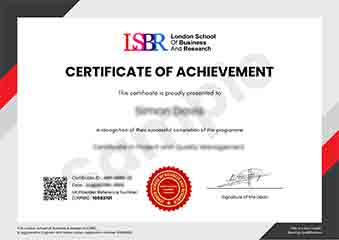
Sample Certificate
Preview the certificate you'll receive upon successful completion of this program.
Get Free Course Info
Receive detailed course information, curriculum breakdown, and career outcomes straight to your inbox.
Employer Sponsored?
Many employers cover professional development costs. Request a corporate invoice and we'll handle the rest. Bulk enrollment discounts available for teams of 3+.
Your Path to Certification
Four simple steps to your professionally recognised qualification
Enroll & Get Instant Access
Complete your enrollment and access course materials immediately
Study at Your Own Pace
Work through the modules on your schedule, from anywhere in the world
Complete Assessments
Demonstrate your knowledge through practical, real-world assessments
Receive Your Certificate
Get your official LSBR UK certificate, recognised across 180+ countries
Join Thousands Who Transformed Their Careers
Our graduates consistently report measurable career growth and professional advancement after completing their programmes.
What People Say About Us
Hear from our students about their experience with the Undergraduate Certificate in Portable Biosensor Devices Development at LSBR UK - Executive Education.
Charlotte Williams
United Kingdom"The course material was incredibly comprehensive, covering everything from sensor design to data analysis, and I was impressed by how well it prepared me for real-world applications in biosensor development. Through hands-on labs and projects, I gained valuable practical skills in device fabrication, testing, and validation, which I'm confident will be highly beneficial in my future career. The knowledge I acquired in this course has not only deepened my understanding of portable biosensor devices but also opened up exciting possibilities for me to contribute to innovative healthcare solutions."
Jack Thompson
Australia"The Undergraduate Certificate in Portable Biosensor Devices Development has been a game-changer for my career, equipping me with the skills to design and develop innovative biosensors that can be applied in real-world settings, from healthcare to environmental monitoring. Through this course, I gained a deep understanding of the latest technologies and industry trends, allowing me to make a meaningful impact in my current role and opening up new opportunities for career advancement. With the knowledge and expertise I acquired, I am now confident in my ability to contribute to the development of cutting-edge biosensor devices that can drive positive change in various industries."
Ruby McKenzie
Australia"The course structure was well-organized, allowing me to seamlessly progress from foundational concepts to advanced topics in portable biosensor devices development, which significantly enhanced my understanding of the subject. I appreciated how the comprehensive content covered a wide range of topics, from device design to real-world applications, providing me with a holistic view of the field and its potential to drive innovation in healthcare and environmental monitoring. Through this course, I gained valuable knowledge that has not only deepened my understanding of biosensor technology but also broadened my perspectives on its potential to address real-world challenges."
Still deciding?
Join 23,000+ professionals who advanced their careers. Enroll today and start learning immediately.
Enroll NowSecure payment • Instant access • Certificate included