
Undergraduate Certificate in Simulating Turbulent Flow Systems
Earn an Undergraduate Certificate in simulating turbulent flow systems to gain advanced skills in fluid dynamics and computational modeling.
Undergraduate Certificate in Simulating Turbulent Flow Systems
Programme Overview
The Undergraduate Certificate in Simulating Turbulent Flow Systems is designed for students with a background in engineering, physics, or mathematics who seek to deepen their expertise in computational fluid dynamics (CFD) and turbulence modeling. The programme equips learners with advanced skills in simulating complex turbulent flow systems, which are critical in a variety of industries, including aerospace, automotive, and environmental engineering. Through a combination of theoretical and practical modules, students will gain proficiency in using industry-standard software and tools for CFD simulations, as well as a solid understanding of the underlying physical principles governing turbulent flows.
Key skills and knowledge that learners will develop include a comprehensive understanding of turbulence models, numerical methods for solving partial differential equations, and advanced computational techniques for efficient and accurate simulations. Students will also enhance their problem-solving abilities by applying these skills to real-world scenarios, developing the capability to analyze and interpret complex data sets and optimize flow systems. The programme is structured to provide a robust foundation for careers in research, development, and engineering, as well as to support further academic pursuits in related fields.
The career impact of this programme is significant, as graduates will be well-prepared to enter roles requiring expertise in CFD and turbulence simulation. Potential career paths include positions in R&D departments of aerospace and automotive companies, environmental consulting firms, and research institutions. Graduates will also be well-positioned to pursue advanced degrees or to lead projects involving complex flow simulations in various engineering disciplines.
What You'll Learn
Embark on a transformative journey with the Undergraduate Certificate in Simulating Turbulent Flow Systems, designed to empower you with advanced knowledge and practical skills in fluid dynamics. This program provides a comprehensive overview of turbulent flow systems, enabling you to understand and simulate complex fluid behaviors in various engineering and scientific contexts. Key topics include computational fluid dynamics (CFD), turbulence modeling, and high-performance computing techniques, equipping you with the tools to analyze and predict fluid behavior in real-world applications.
Graduates of this program are well-prepared to apply their skills in a range of industries, from aerospace and automotive to renewable energy and environmental engineering. Through hands-on projects and case studies, you will learn to use industry-standard software and techniques for simulating turbulent flows, enhancing your ability to solve complex engineering challenges. This certificate is particularly valuable for those seeking to advance their careers in research, development, or operational roles where understanding and optimizing fluid dynamics is crucial.
Upon completion, you will be ready to pursue advanced degrees or secure positions as simulation engineers, research analysts, or project managers in sectors that rely on accurate fluid flow simulation. The skills you acquire will not only open doors to specialized roles but also provide a solid foundation for interdisciplinary collaboration and innovation. Join us to unlock your potential in the exciting field of turbulent flow systems simulation.
Programme Highlights
Industry-Aligned Curriculum
Developed with industry leaders for job-ready skills
Globally Recognised Certificate
Recognised by employers across 180+ countries
Flexible Online Learning
Study at your own pace with lifetime access
Instant Access
Start learning immediately, no application process
Constantly Updated Content
Latest industry trends and best practices
Career Advancement
87% report measurable career progression within 6 months
Topics Covered
- Foundational Concepts: Covers the core principles and key terminology.: Numerical Methods: Introduces computational techniques for simulating turbulent flows.
- Data Analysis: Teaches statistical methods for analyzing turbulent flow data.: Software Tools: Familiarizes students with specialized software for flow simulation.
- Case Studies: Analyzes real-world applications of turbulent flow simulation.: Project Work: Applies knowledge through practical simulation projects.
What You Get When You Enroll
Key Facts
Audience: Engineering students, industry professionals
Prerequisites: Basic fluid dynamics knowledge
Outcomes: Simulate turbulent flow systems, apply computational methods
Ready to Advance Your Career?
Join thousands of professionals who have transformed their careers with LSBR UK
Why This Course
Specialized Skill Development: An Undergraduate Certificate in Simulating Turbulent Flow Systems equips professionals with advanced computational skills, specifically in simulating turbulent flow dynamics. This is crucial for engineers and scientists working in aerospace, automotive, and environmental engineering, where understanding fluid dynamics is key to product design and optimization.
Enhanced Career Opportunities: With a certificate in this field, professionals can expand their career horizons. For instance, aerospace engineers can enhance their capabilities in designing more efficient aircraft, while environmental scientists can improve their ability to model air and water pollution dispersion. This specialization can lead to roles in research and development, simulation modeling, or advanced computational analysis.
Industry Demand: There is a growing demand for professionals skilled in simulating turbulent flow systems, driven by advancements in computational technology and the increasing complexity of design challenges across various industries. This trend underscores the value of having expertise in this area, making it a strategic choice for career growth and staying competitive in the job market.
3-4 Weeks
Study at your own pace
Course Brochure
Download our comprehensive course brochure with all details
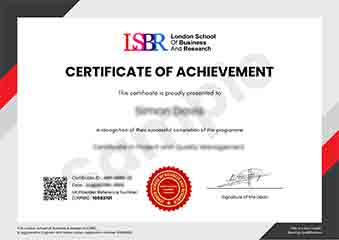
Sample Certificate
Preview the certificate you'll receive upon successful completion of this program.
Get Free Course Info
Receive detailed course information, curriculum breakdown, and career outcomes straight to your inbox.
Employer Sponsored?
Many employers cover professional development costs. Request a corporate invoice and we'll handle the rest. Bulk enrollment discounts available for teams of 3+.
Your Path to Certification
Four simple steps to your professionally recognised qualification
Enroll & Get Instant Access
Complete your enrollment and access course materials immediately
Study at Your Own Pace
Work through the modules on your schedule, from anywhere in the world
Complete Assessments
Demonstrate your knowledge through practical, real-world assessments
Receive Your Certificate
Get your official LSBR UK certificate, recognised across 180+ countries
Join Thousands Who Transformed Their Careers
Our graduates consistently report measurable career growth and professional advancement after completing their programmes.
What People Say About Us
Hear from our students about their experience with the Undergraduate Certificate in Simulating Turbulent Flow Systems at LSBR UK - Executive Education.
Oliver Davies
United Kingdom"The course provided high-quality material that deeply delved into the complexities of turbulent flow systems, equipping me with practical skills in simulation techniques that are highly relevant for my career in aerospace engineering. I gained valuable knowledge that I can directly apply to real-world problems, enhancing my problem-solving abilities."
Zoe Williams
Australia"This certificate program has been incredibly valuable, equipping me with advanced simulation techniques that are directly applicable in the aerospace industry. It has not only enhanced my technical skills but also opened up new career opportunities in fluid dynamics research and development."
Kai Wen Ng
Singapore"The course structure is well-organized, providing a comprehensive understanding of simulating turbulent flow systems that directly translates to real-world applications, enhancing my professional growth significantly."
Still deciding?
Join 23,000+ professionals who advanced their careers. Enroll today and start learning immediately.
Enroll NowSecure payment • Instant access • Certificate included